
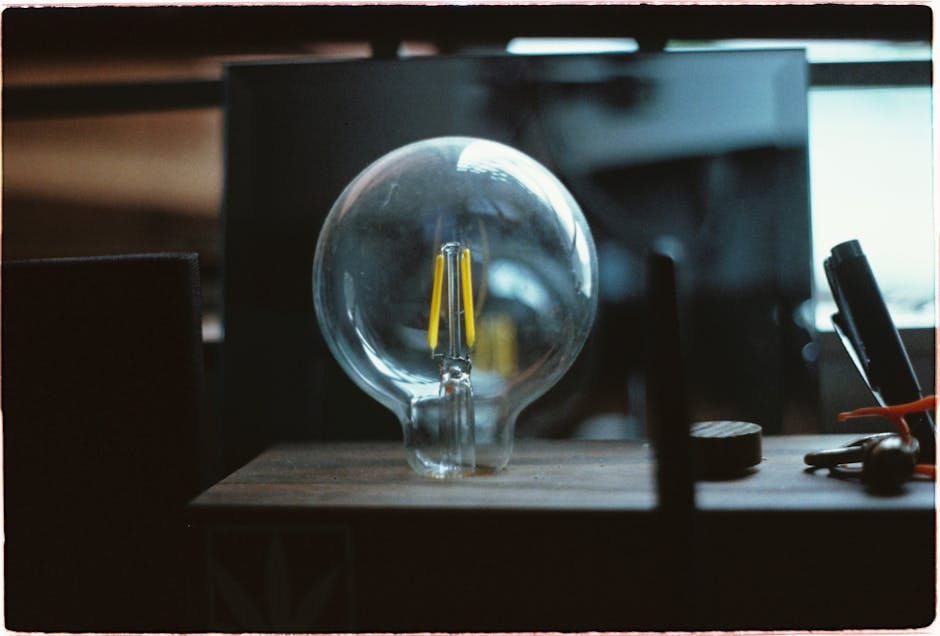
LED Lighting Problems: Why This Electrician Is Switching Back To Incandescent
LED lighting has been heralded as the future, promising unparalleled energy efficiency, extended lifespans, and a significant reduction in our carbon footprint. For years, electricians like myself eagerly embraced this technological shift, recommending LED solutions to clients for homes and businesses alike. The narrative was simple: switch to LED, save money, and help the planet. However, after years of installing, troubleshooting, and replacing countless LED fixtures and bulbs, a different reality has emerged. The initial promise often clashes with practical issues, leading to unexpected headaches and costs. This article delves into the persistent problems I’ve encountered as an electrician, explaining why, for certain applications and client needs, I’m seriously considering a return to the tried-and-true incandescent bulb.
The promise of LED versus the practical reality
When LEDs first entered the mainstream, the excitement was palpable. Advertisements showcased bulbs lasting decades, consuming a fraction of the power, and producing very little heat. On paper, it was a dream come true for energy-conscious consumers and professionals. Homeowners envisioned never changing a light bulb again, while businesses projected massive savings on utility bills and maintenance. As an electrician, I initially bought into this vision, enthusiastically installing new LED systems, retrofitting existing fixtures, and upgrading entire commercial spaces.
However, the real-world application quickly revealed a different story. The “decade-long” lifespan often proved to be an optimistic projection, with many units failing prematurely. Instead of simple bulb replacements, entire integrated fixtures would die, requiring a more complex and costly replacement. Clients began reporting issues ranging from flickering lights and inconsistent color temperatures to outright dead bulbs long before their promised lifespan. The initial investment, often higher than incandescent or even fluorescent alternatives, started to look less appealing when considering the unforeseen service calls and subsequent replacement costs.
The technical headaches and hidden costs
Digging deeper into the practical failures, it became clear that many of the issues stem from the inherent complexity of LED technology compared to its predecessors. While the LED chip itself can be durable, it requires a sophisticated driver to convert alternating current (AC) to direct current (DC) and regulate the power supply. This driver is often the weakest link in the system.
- Driver failures: Unlike an incandescent bulb where a simple filament burns out, an LED’s driver is a small circuit board susceptible to heat, voltage fluctuations, and component degradation. When the driver fails, the entire fixture or bulb is rendered useless, even if the LED chips are still functional. This means instead of a $1 incandescent bulb, you might be replacing a $20 LED bulb or a $100+ integrated fixture.
- Flicker and dimming issues: Many cheaper or poorly designed LEDs use Pulse Width Modulation (PWM) for dimming. While imperceptible to some, sensitive individuals can experience headaches, eye strain, or even perceive a noticeable flicker. Compatibility with existing dimmer switches is also a constant battle; older dimmers designed for resistive incandescent loads often don’t work well with the capacitive or inductive loads of LEDs, leading to buzzing, flickering, or incomplete dimming. Troubleshooting these compatibility problems adds significant time and cost to installations.
- Color quality and consistency: While Color Rendering Index (CRI) has improved, not all LEDs are created equal. Cheaper LEDs often have poor CRI, making colors appear dull or unnatural. More frustrating is the inconsistency between batches or even within the same product line. You might replace a bulb, only for the new one to have a slightly different hue (a problem known as “binning”) that is noticeable and aesthetically displeasing, especially in multi-bulb fixtures or recessed lighting arrays.
These technical glitches translate directly into hidden costs for both the electrician and the consumer. Increased troubleshooting time, multiple service calls, and the need for more frequent replacements of supposedly “long-lasting” products eat into the initial energy savings.
Environmental and health concerns often overlooked
Beyond the immediate functional problems, a closer look reveals several long-term environmental and health considerations that are often overshadowed by the “green” marketing of LEDs. The disposal of failed LED units is far more complex than a simple glass incandescent bulb.
- E-waste dilemma: LEDs contain various components, including circuit boards with solder, sometimes rare earth elements, and plastics. This makes them electronic waste (e-waste) that cannot simply be thrown into regular trash. Proper recycling infrastructure is often lacking, meaning many end up in landfills, contributing to pollution. This contrasts sharply with incandescent bulbs, which are primarily glass and a small metal filament, posing less of an environmental burden upon disposal.
- Blue light emission: Many modern LEDs, especially those with cooler color temperatures, emit a significant amount of light in the blue spectrum. Research suggests that prolonged exposure to blue light, particularly in the evening, can disrupt natural circadian rhythms, affecting sleep patterns and potentially contributing to eye strain and other health issues. While warmer temperature LEDs mitigate this, the prevalence of cooler options in commercial and task lighting is a concern.
While incandescents are certainly less energy efficient, their simplicity minimizes these secondary environmental and health impacts. The “green” label on LEDs needs to be critically examined through a full lifecycle lens, not just initial energy consumption.
A pragmatic return: why incandescent still holds a niche
Given the array of persistent issues, my perspective as an electrician has evolved. While I still recommend LEDs for certain applications where their specific advantages are critical (e.g., accent lighting, areas needing extremely low heat, or very specific long-term commercial installations with high-quality systems), I’ve also come to appreciate the straightforward virtues of incandescent lighting for many general-purpose needs.
Incandescent bulbs offer:
- Unrivaled light quality: A perfect Color Rendering Index (CRI) of 100, providing warm, full-spectrum light that is consistently pleasing and accurate. There are no “binning” issues or poor CRI concerns.
- Absolute flicker-free operation: Their light production mechanism ensures a smooth, constant output, eliminating any flicker concerns and providing comfort for all users, regardless of sensitivity.
- Universal dimmer compatibility: Incandescent bulbs work flawlessly with virtually any dimmer switch, providing smooth, consistent dimming across the entire range without buzzing or flickering.
- Simplicity and low replacement cost: When an incandescent bulb fails, it’s a matter of unscrewing one and screwing in another for less than a dollar. There are no drivers to fail, no integrated circuits, and no complex troubleshooting.
- Minimal e-waste: While less efficient, their disposal is far less problematic in terms of electronic waste.
For applications where initial cost, light quality, consistent performance, and ease of maintenance are paramount – such as residential living spaces, bedrooms, or older homes where retrofitting entire dimmer systems isn’t feasible – the incandescent bulb remains a surprisingly robust and practical choice. The table below highlights some key comparisons:
| Feature | Incandescent | LED |
|---|---|---|
| Energy Efficiency | Low | High |
| Initial Bulb Cost | Very Low | Moderate to High |
| Lifespan (rated) | ~1,000 hrs | ~15,000-50,000 hrs (but driver fails) |
| Light Quality (CRI) | Excellent (~100) | Varies (often 80-90, can be higher) |
| Flicker Risk | None | Moderate (especially with dimmers) |
| Dimmer Compatibility | Excellent | Variable, often problematic |
| Disposal Complexity | Low (glass/metal) | High (e-waste, hazardous materials) |
| Component Failures | Filament | Driver, chip degradation |
| Replacement Cost (per failure) | Very Low (bulb) | High (often entire fixture) |
The journey from incandescent to LED has been presented as a linear progression of undeniable improvement. However, as an electrician on the front lines, my experience reveals a more nuanced reality. While LED lighting offers significant energy savings and specific advantages, it also introduces a host of practical problems: unreliable drivers, flickering, inconsistent light quality, and compatibility nightmares. These technical headaches translate into hidden costs, increased maintenance, and client frustration, often negating the promised long-term benefits. Furthermore, overlooked environmental concerns regarding e-waste and potential health impacts from blue light emission add layers of complexity.
My decision to consider switching back to incandescent for certain applications is not a rejection of progress, but a pragmatic acknowledgment of its limitations. Sometimes, the elegant simplicity, flawless light quality, universal compatibility, and predictable performance of an older technology outweigh the perceived “efficiency” of a newer, more temperamental one. For many situations, especially in residential settings, the traditional incandescent bulb still offers a superior, hassle-free lighting experience that prioritizes user comfort and true value over theoretical energy savings.
Related posts
- Nintendo Switch 2: How to Seamlessly Transfer Your Games
- Top Low-Code Automation Tools 2025: Unlock Peak Business Productivity
- December EV Deals: Why Now is the Best Time to Buy Your Electric Vehicle
- Anker’s Powerful Laptop Power Bank Drops to Black Friday Low Again
- Danganronpa’s 10 Million Sales: A Deep Dive into Hope’s Enduring Appeal
Image by: Nghia .8pm
https://www.pexels.com/@phamnghia