

Startup’s Revolutionary Tech Transforms Common Waste: A Game-Changer for Sustainability

Startup's Revolutionary Tech Transforms Common Waste: A Game-Changer for Sustainability
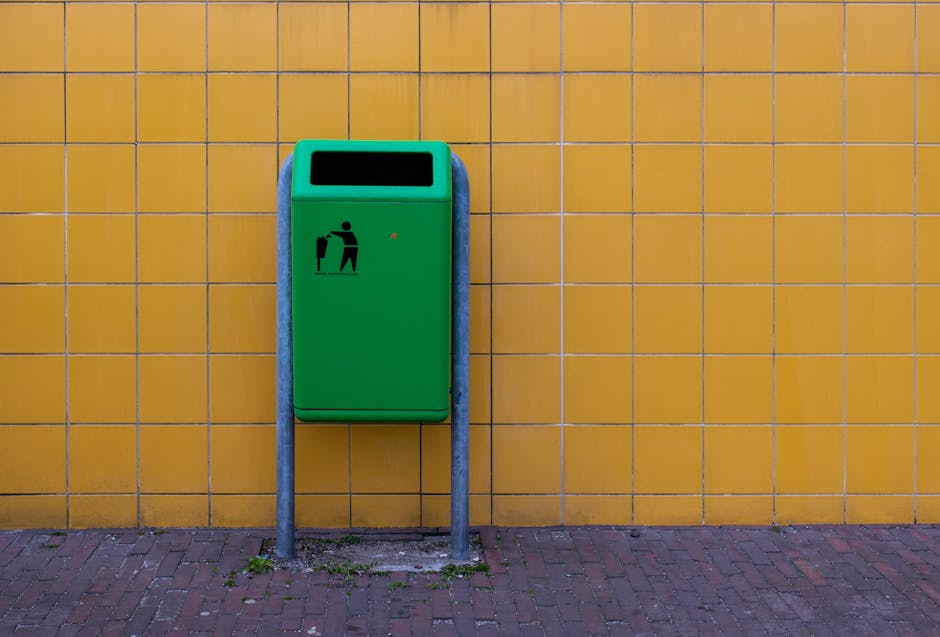
In an era increasingly defined by environmental consciousness, the monumental challenge of waste management looms large. Mountains of discarded materials clog our landfills, pollute our oceans, and contribute significantly to greenhouse gas emissions, demanding urgent and innovative solutions. Humanity’s reliance on a linear “take-make-dispose” economy is simply unsustainable. However, a glimmer of hope has emerged from the entrepreneurial spirit, as a pioneering startup is now making waves with its revolutionary technology designed to transform common waste into valuable resources. This is not just another recycling initiative; it’s a profound redefinition of waste itself, promising to be a genuine game-changer in the global quest for a sustainable future, challenging established norms and forging new pathways for resource recovery.
The pressing global waste challenge
The sheer volume of waste generated worldwide presents an overwhelming environmental and economic burden. Annually, our planet grapples with over two billion tons of municipal solid waste, a figure projected to surge by 70% by 2050 if current trends persist. This deluge of refuse extends beyond household bins, encompassing industrial byproducts, agricultural residues, and electronic scrap, each posing unique disposal dilemmas. Landfills, once considered practical solutions, are now overflowing, contaminating soil and groundwater, and releasing potent methane gas into the atmosphere. Incineration, while reducing volume, often produces harmful air pollutants. The depletion of virgin resources driven by constant consumption cycles further exacerbates the problem, highlighting an urgent need for disruptive innovations that can fundamentally alter our relationship with waste.
Unveiling the revolutionary technology
Stepping into this critical void, a visionary startup has developed a proprietary technology that transcends traditional waste processing. Rather than merely sorting or burning, their advanced system employs a novel form of molecular restructuring, capable of breaking down complex waste streams into their fundamental components and reassembling them into high-value raw materials or energy sources. This process is particularly effective on mixed waste, including hard-to-recycle plastics, organic matter, and composite materials that typically end up in landfills. The technology operates at significantly lower energy inputs than conventional methods and produces minimal secondary waste, demonstrating a truly circular approach. Imagine discarded packaging, agricultural residues, and even certain industrial sludges being fed into a system and emerging as pristine components for new products.
| Waste Category Processed | Traditional Outcome | Revolutionary Tech Outcome |
|---|---|---|
| Mixed Plastics (multi-layer, contaminated) | Landfill or low-grade recycling | High-purity polymer feedstocks |
| Organic Food Waste | Landfill (methane emissions) | Bio-oils, sustainable fertilizers |
| Agricultural Residues (e.g., straw, husks) | Burned or composted (slowly) | Biomaterials for construction, chemicals |
| Textile Waste (mixed fibers) | Landfill or energy recovery | Recycled fibers, cellulose derivatives |
Economic and environmental impact
The implications of this technology are profound, offering a dual benefit to both the environment and the economy. Environmentally, its impact is transformative: significantly diverting waste from landfills, drastically reducing greenhouse gas emissions from decomposition and incineration, and conserving virgin natural resources by reintroducing materials back into the production loop. This fosters a truly circular economy, where waste is seen not as an end product but as an untapped reservoir of value. Economically, the startup’s innovation opens up entirely new industries and job markets. By creating valuable secondary raw materials, it reduces manufacturing costs for businesses, strengthens supply chain resilience, and provides local economic opportunities in waste processing and material recovery, turning what was once a costly disposal problem into a profitable resource stream.
Scaling up and future implications
The journey from innovative prototype to global solution involves strategic scaling and widespread adoption. The startup is actively engaging with municipalities, industrial partners, and national governments to establish processing facilities that can handle increasing volumes of diverse waste streams. Initial pilot projects have demonstrated the technology’s efficacy and scalability, paving the way for larger commercial deployments. The future implications are immense: envision cities where landfills are obsolete, where waste collection points are material recovery hubs, and where industries source a significant portion of their raw materials from recycled content. This paradigm shift could accelerate global sustainability goals, reduce reliance on finite resources, and foster a cleaner, healthier planet for generations to come, truly making waste a resource, not a burden.
The challenge of global waste management has long been a daunting one, contributing significantly to environmental degradation and resource depletion. However, the emergence of a groundbreaking startup, with its revolutionary waste transformation technology, offers a compelling solution. By fundamentally redefining how we perceive and process discarded materials, this company is not merely improving existing recycling methods but creating entirely new pathways for resource recovery. Its innovative approach promises to drastically reduce landfill reliance, mitigate greenhouse gas emissions, and conserve precious natural resources, while simultaneously fostering new economic opportunities. This paradigm shift from a linear “take-make-dispose” model to a truly circular economy represents a critical step towards a sustainable future, where common waste is universally recognized and utilized as a valuable commodity, underscoring its pivotal role as a genuine game-changer for environmental sustainability worldwide.
Related posts
- The Unwanted AI Christmas Gift: Tech Fails This Holiday Season
- Never Lose Your Wallet Again: Top Slim Trackers (25% Off!)
- Stop, Shop, and Scroll
- Enhance Lab Efficiency: Purity Scientific Launches Free Troubleshooting for Analytical Instruments
- Why IBM CEO Arvind Krishna is still hiring humans in the AI era
Image by: Jan van der Wolf
https://www.pexels.com/@jan-van-der-wolf-11680885