

Nvidia Cosmos Reason 2: Bridging the Gap Between AI and the Physical World

Nvidia Cosmos Reason 2: Bridging the Gap Between AI and the Physical World
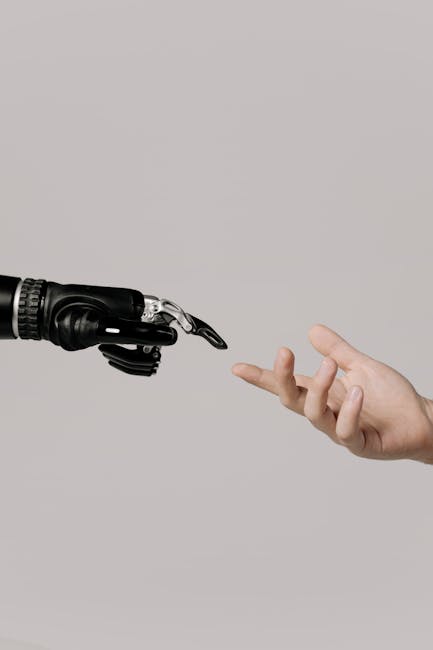
In the dynamic landscape of artificial intelligence, Nvidia Cosmos emerges as a pivotal platform, and its second profound reason for existence lies in its unparalleled ability to bridge the intricate gap between AI and the physical world. This is not merely about deploying AI algorithms in real-world scenarios, but fundamentally enabling AI to perceive, interact with, and understand the complexities of our physical environment with unprecedented accuracy and realism. It’s about empowering intelligent systems, from robotic arms to autonomous vehicles, to operate seamlessly and safely alongside humans, transforming industries and redefining the boundaries of automation. This article delves into how Nvidia Cosmos achieves this critical connection, harnessing advanced simulation, digital twins, and real-time processing to unlock a new era of intelligent interaction with our physical surroundings.
The imperative for AI in the physical realm
For artificial intelligence to truly deliver on its promise, it must transcend purely digital domains and effectively operate within the tangible realities of our world. Traditional AI, often confined to data centers and abstract computations, faces significant limitations when confronted with the unpredictable, dynamic, and often chaotic nature of physical spaces. The imperative arises from the need for AI to control robots, navigate vehicles, manage smart factories, and even assist in medical procedures, all of which demand an acute understanding of physics, spatial relationships, and real-time environmental changes. Without a robust bridge to the physical realm, AI remains a powerful but ultimately siloed technology, unable to fully impact the industries and daily lives it is designed to enhance. This shift necessitates not just intelligent algorithms, but intelligent systems that can perceive, reason, and act in concert with the laws of nature and human interaction.
Nvidia Cosmos and the power of digital twins
At the core of Nvidia Cosmos’s strategy for connecting AI with the physical world is the sophisticated utilization of digital twins. A digital twin is a virtual replica of a physical object, process, or system, which is constantly updated with real-world data. Nvidia Cosmos leverages its Omniverse platform to create incredibly detailed, physics-accurate, and real-time digital twins. These aren’t just static 3D models; they are living, breathing simulations that mirror their real-world counterparts in every critical aspect, including material properties, environmental conditions, and operational dynamics. By creating these precise simulations, AI models can be trained, tested, and validated in a risk-free virtual environment before ever touching physical hardware. This capability is revolutionary for developing robust AI for complex systems like autonomous robots, entire factories, or even smart cities. It allows developers to run countless scenarios, identify potential failures, and optimize AI behavior in ways that would be impractical, costly, or dangerous in the physical world.
From simulation to reality: driving autonomous systems and robotics
The ability of Nvidia Cosmos to generate and utilize synthetic data is a game-changer for autonomous systems and robotics. Training AI for complex physical tasks often requires vast amounts of diverse data, which can be expensive and time-consuming to collect in the real world, especially for rare or hazardous situations. Cosmos, through its advanced simulation capabilities, can generate photorealistic and physics-accurate synthetic data at scale, covering a myriad of scenarios that AI needs to learn from. This synthetic data trains AI models to perceive, navigate, and interact effectively with their environment. Furthermore, Cosmos establishes a continuous feedback loop: real-world data from deployed systems can be used to refine and improve the fidelity of the digital twins and simulations, which in turn leads to more robust AI training. This iterative process ensures that AI models are constantly learning and adapting, making them more resilient and intelligent when deployed in dynamic, real-world conditions, ultimately accelerating the development and deployment of truly autonomous robots and vehicles.
The economic and industrial impact of physical AI
The bridging of AI and the physical world by Nvidia Cosmos carries immense economic and industrial implications across diverse sectors. Industries such as manufacturing, logistics, automotive, and energy stand to gain significantly from enhanced automation, predictive maintenance, and optimized operational efficiencies. By simulating factory floors with digital twins, companies can test new production lines or robot workflows without disrupting existing operations, reducing downtime and accelerating deployment. Autonomous systems developed within Cosmos can revolutionize supply chains, making them more resilient and efficient. The platform’s ability to facilitate realistic testing for autonomous vehicles drastically improves safety and reduces development costs. Consider the following impact areas:
| Industry Sector | Key Benefit of Physical AI via Cosmos | Estimated Impact |
|---|---|---|
| Manufacturing | Optimized robot workflows, predictive maintenance | Up to 20% reduction in operational costs |
| Logistics | Autonomous warehouse operations, route optimization | 15-25% improvement in efficiency |
| Automotive | Safer autonomous vehicle development and testing | Reduced testing miles, faster time-to-market |
| Architecture, Engineering, Construction (AEC) | Digital twin for construction planning, site monitoring | 10-15% project cost savings |
These tangible benefits highlight Cosmos’s role not just as a technological marvel, but as an economic engine, driving innovation and efficiency across global industries.
Nvidia Cosmos is fundamentally transforming how artificial intelligence interacts with our tangible world, moving beyond abstract algorithms to embodied intelligence. Its second key reason for existence, bridging the gap between AI and the physical realm, is critical for the future of automation and intelligent systems. Through the sophisticated creation and utilization of digital twins within Omniverse, Cosmos enables AI models to be rigorously trained and tested in highly realistic, physics-accurate simulations, mitigating risks and accelerating development. This robust platform facilitates the generation of crucial synthetic data, allowing autonomous systems and robotics to learn from countless scenarios before real-world deployment. The continuous feedback loop from reality to simulation ensures perpetual learning and refinement. Ultimately, Cosmos is not just building a bridge; it’s constructing an entirely new infrastructure for intelligent machines to perceive, understand, and safely operate within our physical environment, unlocking unprecedented efficiencies and innovations across every industry.
No related posts
Image by: cottonbro studio
https://www.pexels.com/@cottonbro