

McKay Brothers & Go West: Ultra-Low Latency Chicago-Tokyo Network

McKay Brothers & Go West: Ultra-Low Latency Chicago-Tokyo Network
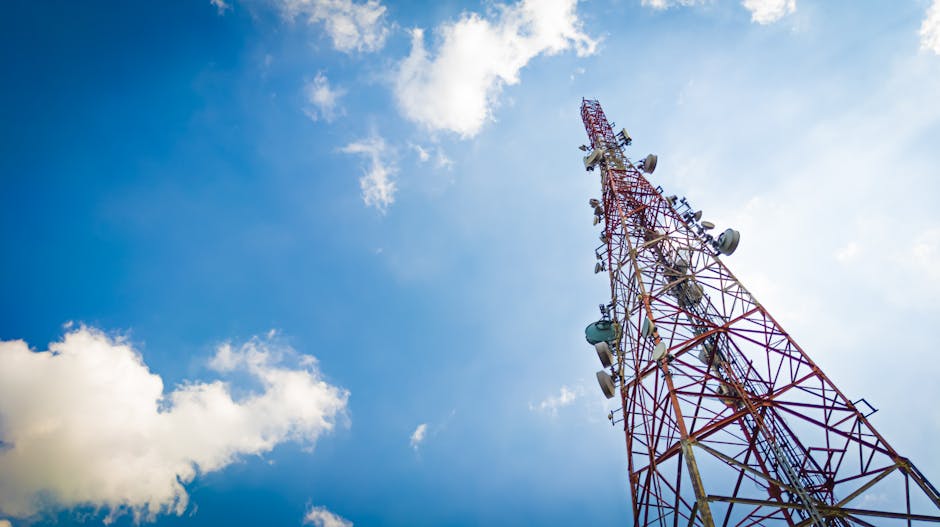
In the relentlessly competitive world of global financial markets, every nanosecond counts. The difference between profit and loss, between leading and lagging, often hinges on the speed at which data travels. This intense demand for instantaneous information has driven a continuous innovation race, particularly for critical intercontinental routes. This article delves into the groundbreaking efforts of McKay Brothers and Go West, two pioneers who have collaborated to establish an ultra-low latency network connecting the pivotal financial hubs of Chicago and Tokyo. We will explore the technological advancements, strategic routing, and profound impact of this endeavor on high-frequency trading and global market efficiency, offering insights into how such networks redefine the possibilities of trans-Pacific financial connectivity.
The quest for speed in financial markets
The pursuit of speed in financial markets is not merely an advantage; it is a fundamental necessity, particularly for participants in high-frequency trading (HFT). In this domain, sophisticated algorithms execute trades at speeds imperceptible to humans, exploiting fleeting price discrepancies across different exchanges. Latency, defined as the delay in data transmission, is the primary enemy. A delay of just a few microseconds can mean the difference between a successful arbitrage trade and a missed opportunity, or worse, a losing position. This imperative has driven an arms race in infrastructure development, where firms invest heavily in proximity hosting, advanced server hardware, and, crucially, ultra-low latency networks.
Market makers, who provide liquidity by simultaneously offering to buy and sell securities, also depend heavily on speed. Their ability to update quotes instantly based on market movements ensures tight spreads and efficient price discovery. Any delay leaves them vulnerable to adverse selection, where faster participants can trade against their stale quotes. The continuous pressure to shave off milliseconds from round-trip times between major financial centers like Chicago and Tokyo underscores the extreme competitiveness of modern finance. This relentless quest has pushed the boundaries of physics and engineering, exploring every possible avenue to accelerate data flow.
McKay brothers and Go West: a partnership in innovation
McKay Brothers has long been recognized as a leader in building and operating ultra-low latency microwave networks, primarily for financial market data. Their expertise lies in constructing highly optimized terrestrial routes, leveraging the speed of light in air – which is significantly faster than in fiber optic cables – to connect key trading venues. McKay Brothers pioneered the use of microwave links over vast distances, establishing critical pathways between financial hubs like Chicago, New York, and London. Their network is not just about raw speed but also about reliability and directness, minimizing the number of hops and equipment involved in data transmission.
The challenge of extending this ultra-low latency advantage across the Pacific, however, required a specialized approach. This is where Go West comes into play. Go West is a joint venture that focuses specifically on bridging the immense geographical gap between North America and Asia with unparalleled speed. By combining McKay Brothers’ proven prowess in low-latency terrestrial microwave networks with Go West’s strategic investments in optimal trans-Pacific infrastructure, the partnership creates an end-to-end solution. This collaboration effectively extends the benefits of McKay Brothers’ ultra-low latency ethos to the challenging intercontinental segment, making a Chicago-Tokyo connection viable at speeds previously considered unattainable.
Engineering the ultra-low latency route
Achieving ultra-low latency across the Chicago-Tokyo corridor is a monumental engineering feat, demanding a multi-faceted approach that optimizes every segment of the journey. The first critical component involves McKay Brothers’ terrestrial microwave network. Unlike fiber optic cables, where light travels through glass at approximately two-thirds of its speed in a vacuum, microwave signals travel through the air, much closer to the speed of light in a vacuum. This inherent physical advantage makes microwave technology indispensable for the initial terrestrial legs, connecting financial data centers in Chicago (often Aurora, IL) to the trans-Pacific gateway. These links require clear line-of-sight paths, necessitating the strategic placement of towers and repeaters across vast landscapes, often bypassing urban congestion and its associated delays.
The trans-Pacific segment, however, presents unique challenges. Submarine fiber optic cables remain the only viable method for crossing oceans. Go West’s innovation lies in its meticulous selection and optimization of these cables. This involves identifying the *shortest possible physical routes* and securing capacity on the most direct subsea cables. Factors such as cable age, the number of regeneration points, and even the curvature of the Earth become critical considerations. Furthermore, they seek to minimize points of presence (PoPs) and network equipment, ensuring a “straight-line” path that reduces processing delays. While light in fiber is slower than in air, choosing the absolute shortest fiber path, combined with advanced signal processing techniques and minimizing intermediate network devices, helps to shave precious milliseconds off the total round-trip time. The integration of these optimized terrestrial and subsea components creates a seamless, purpose-built pathway tailored for extreme speed.
To illustrate the significance of these optimizations, consider a simplified comparison of latency between Chicago and Tokyo:
| Route Type | Estimated Round-Trip Latency (ms) | Key Technology/Method |
|---|---|---|
| Standard Commercial Fiber | ~150 – 180 ms | Diverse fiber paths, multiple network hops |
| Optimized Fiber (shortest path) | ~100 – 130 ms | Direct submarine cables, fewer hops |
| Microwave terrestrial, ultra-short subsea fiber |
Note: These figures are illustrative and can vary based on specific endpoints, network conditions, and measurement methodologies. The primary goal of ultra-low latency networks is to consistently achieve the theoretical minimums.
Impact and implications for global trading
The establishment of an ultra-low latency Chicago-Tokyo network by McKay Brothers and Go West has profound implications for global financial markets, particularly for high-frequency trading firms and market makers. For these entities, direct access to the fastest possible data transmission path translates directly into competitive advantage. Firms can now execute arbitrage strategies more effectively across these two major currency and equity markets, capitalize on fleeting price differentials, and maintain tighter bid-ask spreads, which in turn enhances liquidity and reduces transaction costs for all market participants.
This network strengthens the interconnectedness of global financial centers. Improved speed between Chicago, a nexus for futures and derivatives, and Tokyo, a key Asian equity and FX hub, means that events impacting one market can be reflected and reacted to in the other with minimal delay. This facilitates more efficient price discovery and can help stabilize markets during periods of volatility by allowing capital to flow and rebalance more rapidly. The continuous drive for lower latency also pushes the boundaries of technological innovation across the entire financial ecosystem, from network infrastructure to trading algorithms and data analytics, fostering an environment of perpetual advancement in pursuit of absolute speed and efficiency.
Conclusion
The collaboration between McKay Brothers and Go West represents a pivotal achievement in the quest for ultra-low latency connectivity across global financial markets. By combining McKay Brothers’ proven expertise in terrestrial microwave networks with Go West’s strategic optimization of trans-Pacific submarine cable routes, they have forged an unprecedented link between the critical financial hubs of Chicago and Tokyo. This sophisticated engineering feat, leveraging the speed of light in air for terrestrial segments and the shortest possible fiber paths for oceanic crossings, has redefined what is achievable in intercontinental data transmission. Its impact extends far beyond mere speed, fundamentally reshaping the competitive landscape for high-frequency trading firms, enhancing liquidity, and accelerating price discovery across two of the world’s most dynamic financial ecosystems. This network not only offers a direct competitive edge but also underscores the relentless innovation driving global finance towards ever-greater efficiency and interconnectedness.
Related posts
- Hollywood is coming out in force for California’s AI safety bill
- The Rings of Power season 2 is an even stronger expansion of Tolkien’s mythos
- Winning Time season 2 was a slam dunk with audiences – so, of course, Max canceled it
- New Max movies: the biggest films to stream in July 2023
- New movies 2023: the most exciting films coming to theaters this year
Image by: wd toro🇲🇨
https://www.pexels.com/@wdtoro