

Google Maps at 20: Have We Lost Our Way While Finding It?

Google Maps at 20: Have We Lost Our Way While Finding It?
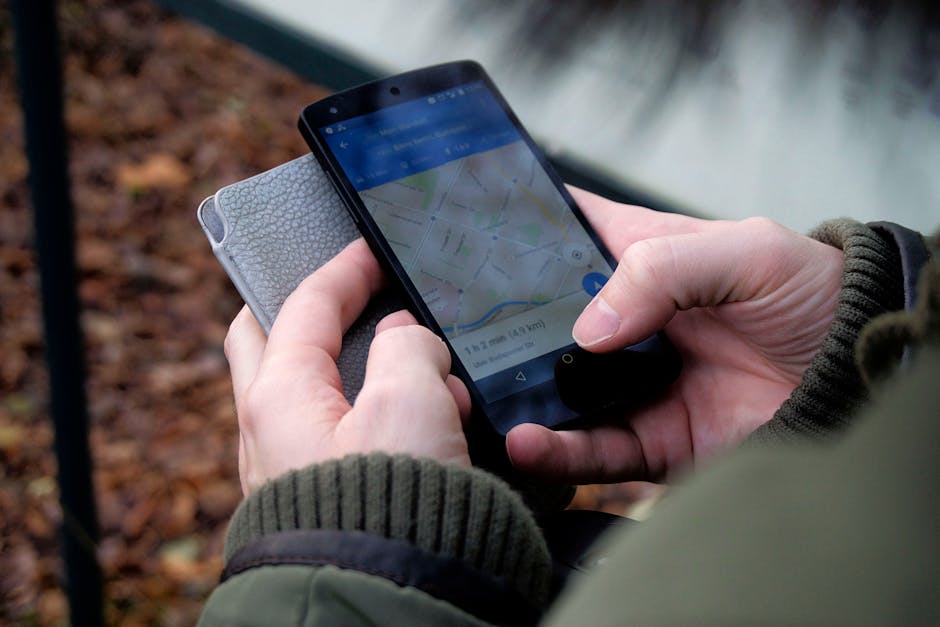
As Google Maps celebrates its 20th anniversary, it stands as an undeniable titan in digital navigation, fundamentally altering how we interact with the world around us. From its humble beginnings, offering basic directions, it has blossomed into an indispensable tool, guiding billions through intricate cityscapes and remote landscapes alike. Its ubiquity means most of us can barely recall a time before its blue dot illuminated our paths, making physical maps and printed directions relics of a bygone era. Yet, as we reflect on two decades of unparalleled convenience and constant innovation, a critical question emerges: In our relentless pursuit of finding our way with such advanced technology, have we inadvertently lost something vital? This article will delve into the profound impact of Google Maps, exploring both its revolutionary benefits and the subtle, sometimes overlooked, ways it may have redirected our inherent sense of exploration and privacy.
The navigation revolution: A world at our fingertips
Before Google Maps, navigating unfamiliar territory often involved unfolding large paper maps, deciphering cryptic directions from strangers, or relying on clunky, expensive GPS devices. The launch of Google Maps in 2005 marked a seismic shift, democratizing access to high-quality, real-time mapping information for anyone with an internet connection. Suddenly, detailed street views, satellite imagery, and turn-by-turn directions were available on desktops, and soon, on the smartphones that would become extensions of our hands. This wasn’t just about getting from point A to point B; it was about opening up entire cities, countries, and continents to exploration with an unprecedented level of detail and ease. For travelers, it meant less anxiety and more spontaneity. For commuters, it offered real-time traffic updates, helping them dodge congestion. For businesses, it provided an immediate, visual presence on a global stage. The initial revolution was about sheer accessibility and the power it gave individuals to confidently traverse the physical world.
Local businesses and the digital storefront dilemma
Beyond personal navigation, Google Maps swiftly evolved into a critical platform for local commerce and discovery. It transformed from a simple map into a dynamic digital directory, making it effortless for users to find nearby restaurants, shops, services, and attractions. Local businesses, previously reliant on yellow pages or word-of-mouth, suddenly found themselves with a powerful, free digital storefront. Their success often hinged on their visibility within Maps, driven by accurate listings, compelling photos, customer reviews, and stellar ratings. This ushered in the era of ‘local SEO,’ where optimizing a business profile on Google Maps became as crucial as having a physical address. While this offered unparalleled exposure and a level playing field for many small enterprises, it also presented new challenges. Businesses became vulnerable to negative reviews, had to constantly manage their online reputation, and found themselves navigating complex algorithms to ensure they appeared prominently in “near me” searches. The dilemma emerged: immense opportunity coupled with intense digital competition and the pressure to perform in the digital sphere, sometimes overshadowing the quality of the in-person experience.
Privacy, data, and the unmapped journey
The unparalleled convenience offered by Google Maps comes with an implicit trade-off: our personal data. To provide real-time traffic, personalized recommendations, and even predictive navigation, Google Maps relies heavily on collecting vast amounts of user location data. Features like Location History and Timeline, while useful for recalling past journeys or understanding travel patterns, represent a continuous digital breadcrumb trail of our movements. This raises significant privacy concerns. While Google asserts anonymization and offers user controls, the sheer volume and granularity of this data create a powerful profile of our daily lives. Furthermore, the constant guidance of Google Maps might be subtly diminishing our innate navigational skills and sense of adventure. Are we less likely to explore side streets, get purposefully lost, or discover hidden gems if we’re always glued to the “blue dot” ensuring we never stray from the most efficient, pre-determined path? The ability to truly wander and serendipitously stumble upon new places, an essential part of human exploration, might be slowly eroding under the omnipresent gaze of digital maps.
The path ahead: More than just directions?
Looking forward, Google Maps is poised to become even more integrated into our lives, extending far beyond simple directions. Augmented reality (AR) navigation, immersive street views, and sophisticated AI integrations promise an even richer, more interactive experience of the physical world. Imagine holding up your phone and seeing digital overlays of restaurant reviews, historical facts, or public transport information directly on the buildings in front of you. This evolution could transform Google Maps into an all-encompassing information layer, mediating almost every interaction we have with our surroundings. While this offers incredible potential for convenience and understanding, it also amplifies the core question of whether we are losing our way while finding it. As the technology becomes smarter, more predictive, and more pervasive, there’s a risk that our reliance on it could deepen, further dulling our spatial awareness, critical thinking, and capacity for independent discovery. The future of mapping isn’t just about technological advancement; it’s about striking a balance between leveraging powerful tools and preserving our fundamental human abilities to observe, explore, and truly connect with the world unmediated by a screen.
| Year | Key Feature / Event | Impact on Users / Businesses |
|---|---|---|
| 2005 | Google Maps launched | Democratized digital mapping; basic directions, satellite views |
| 2007 | Street view introduced | Immersive virtual exploration; enhanced local business visibility |
| 2007 | Available on iPhone | Mass adoption on mobile devices; ubiquitous navigation |
| 2009 | Turn-by-turn navigation | Replaced standalone GPS devices; hands-free guidance |
| 2010 | Public transit integration | Simplified urban travel; encouraged public transport use |
| 2013 | Offline maps | Navigation without internet; useful in remote areas |
| 2015 | Local Guides program | Crowdsourced reviews and photos; enriched local business data |
| 2019 | Live View (AR walking directions) | Augmented reality navigation; enhanced real-world orientation |
| 2022 | Immersive View | 3D exploration of cities; advanced planning and visualization |
Google Maps has undeniably transformed our relationship with navigation over the past two decades, evolving from a simple mapping service into a complex digital ecosystem. It has brought unparalleled convenience, efficiency, and access to information, empowering us to explore the world with unprecedented ease and confidence. Local businesses have thrived through enhanced visibility, and individuals benefit daily from real-time traffic updates and detailed directions. However, this profound convenience is not without its costs. We’ve explored the critical trade-offs involving personal privacy and the vast quantities of location data collected, alongside the potential erosion of our inherent navigational skills and the diminishing joy of spontaneous discovery. As Google Maps continues its trajectory into augmented reality and deeper AI integration, the core challenge for us, the users, will be to strike a thoughtful balance: to harness its incredible power for finding our way, while consciously preserving our capacity for independent exploration, critical awareness, and the invaluable experience of sometimes, beautifully, getting lost.
Related posts
- We found 80 stocking stuffers under $100 that are actually useful
- Why GM will give you Gemini — but not CarPlay
- The 100+ best Prime Day deals under $100
- Google confirms it deleted Maps Timeline data for some
- Time to upgrade your reading gadgets
Image by: Ingo Joseph
https://www.pexels.com/@ingo