

Android Emergency Live Video & Pixel Watch 4 Gesture Support: Weekly Gear News

Android Emergency Live Video & Pixel Watch 4 Gesture Support: Weekly Gear News
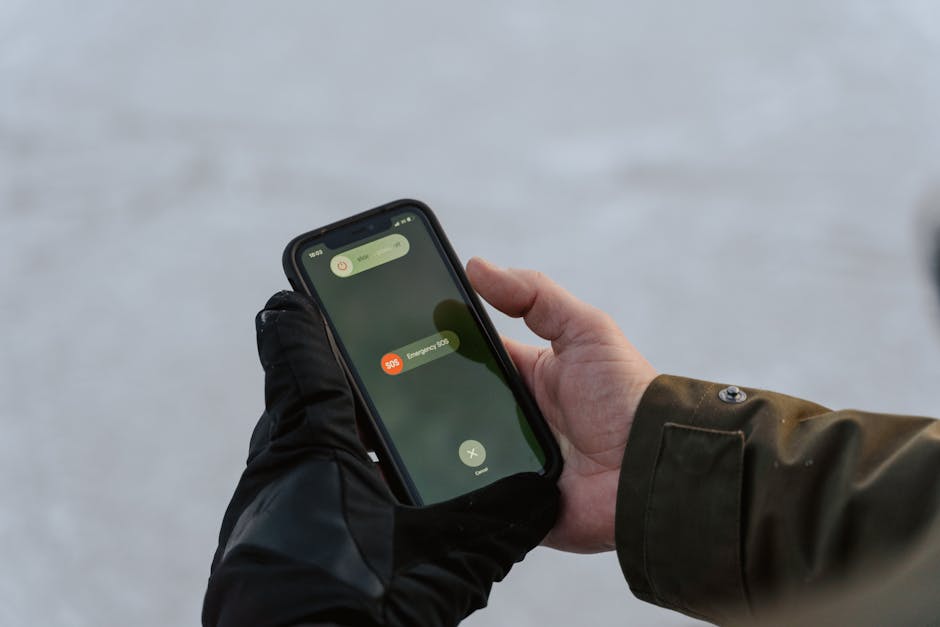
In the ever-evolving landscape of personal technology, two recent developments stand out for their potential to significantly enhance user safety and accessibility: the anticipated integration of emergency live video streaming within Android and the rumored advanced gesture support for the Pixel Watch 4. These innovations represent a crucial step forward, moving beyond mere convenience to offer critical assistance when it matters most. This week’s gear news highlights how our devices are becoming more intuitive and proactive in safeguarding our well-being. We’ll delve into how Android’s emergency capabilities are expanding to provide real-time visual context during crises, and explore the implications of the Pixel Watch 4’s gesture control for hands-free interaction, potentially revolutionizing how we interact with our wearables in various scenarios, including emergencies.
Android’s expanding emergency toolkit: real-time visual context
For years, Android devices have offered crucial emergency features, such as SOS dialing, automatic location sharing with emergency contacts, and medical information storage. These tools have undoubtedly saved lives by streamlining the process of getting help in critical situations. However, the next frontier appears to be the integration of emergency live video streaming. This isn’t just about sharing your location; it’s about providing real-time visual and auditory context directly to your pre-selected emergency contacts or potentially, in the future, to emergency services themselves.
Imagine a scenario where you’re in distress, but unable to speak clearly or describe your surroundings. With emergency live video, a stream from your phone’s camera could be initiated with a simple, discrete action. This live feed would then be shared securely with trusted individuals, giving them immediate insight into your situation, environment, and any immediate threats. This capability moves beyond static data points, offering dynamic, actionable information that can accelerate response times and improve the quality of assistance provided. It transforms your smartphone into a vital, real-time witness, significantly enhancing personal safety protocols.
Technicalities of emergency live video implementation
Implementing a reliable emergency live video streaming feature presents a unique set of technical challenges that Google and Android developers must address. Foremost among these is network stability and bandwidth. Emergency situations often occur in areas with poor cellular reception, requiring robust video compression algorithms and adaptive streaming technologies that can function even on limited bandwidth. The system must prioritize the stream’s integrity and reliability over pristine quality, ensuring the visual context reaches its destination.
Another critical consideration is privacy and data security. The live stream must be encrypted end-to-end, and the activation process must be designed to prevent accidental initiation while remaining easy to trigger under duress. User control over who receives the stream and for how long is paramount. Battery consumption is also a factor; streaming video is resource-intensive, so the feature needs to be optimized to operate effectively without draining the device’s battery in a critical moment. Furthermore, integration with existing emergency infrastructure, such as E911 in the US or other regional emergency numbers, would be the ultimate goal, allowing first responders to gain invaluable insights directly.
Pixel watch 4: intuitive control with advanced gesture support
Shifting focus to wearables, the rumored advanced gesture support for the Pixel Watch 4 promises a revolutionary way to interact with our smartwatches. Traditional smartwatch interaction relies heavily on touchscreens and physical buttons, which can be cumbersome in certain situations—like when your hands are full, dirty, wet, or when you need to be discreet. Advanced gesture recognition, leveraging the watch’s sophisticated sensors (accelerometers, gyroscopes, perhaps even electromyography for muscle movements), can interpret subtle wrist and hand movements as commands.
Examples of such gestures could include a simple wrist flick to scroll through notifications, a pinch motion to answer a call, or a specific hand clench to dismiss an alarm. For individuals with limited dexterity or those performing tasks requiring gloves, these gestures could be transformative, making the smartwatch truly hands-free. This goes beyond the basic wrist raise to wake the screen; it signifies a deeper, more intuitive layer of control that makes the device feel like a natural extension of the user, rather than a separate gadget requiring direct manipulation.
Synergy and the future of wearable safety and control
The true power of these individual advancements lies in their potential synergy. Imagine a scenario where the Pixel Watch 4’s advanced gesture support seamlessly integrates with Android’s emergency live video feature. A specific, discreet gesture on your watch—perhaps a double clench followed by a twist—could instantly activate the emergency live video stream on your paired Android phone. This allows for rapid, hands-free initiation of a critical safety feature, particularly useful if your phone is out of reach or if direct interaction would draw unwanted attention.
This convergence highlights a broader trend in technology: creating interconnected ecosystems that prioritize user safety, accessibility, and intuitive interaction. Wearables are evolving beyond mere notification hubs to become proactive tools for well-being and control. The combination of real-time visual emergency assistance on phones and sophisticated, discreet control via smartwatches paints a picture of a future where technology is not just smart, but also inherently helpful and protective, seamlessly blending into our lives to offer support precisely when and where it’s needed most.
Feature comparison: enhancing emergency responses
| Emergency Feature | Primary Function | Key Benefit | Interaction Method (Current/Potential) |
|---|---|---|---|
| Emergency SOS (Current) | Dials emergency services, shares location | Immediate professional assistance, location pinpointing | Button press, voice command |
| Emergency Contacts (Current) | Notifies chosen contacts, shares location | Personal network awareness, coordinates support | Automated, user-initiated via app |
| Live Video Stream (Upcoming) | Streams real-time video/audio to contacts/services | Visual context, potential evidence, enhanced situation awareness | App activation, discreet gesture (potential) |
| Pixel Watch Gestures (Upcoming) | Hands-free device control | Accessibility, discrete operation, faster interaction | Wrist flick, pinch, clench (sensor-based) |
The advancements in Android’s emergency capabilities, particularly the integration of live video streaming, alongside the Pixel Watch 4’s rumored gesture support, mark a significant turning point in personal technology. We’ve explored how these features promise to elevate personal safety, moving beyond reactive measures to proactive, real-time assistance. The ability to provide live visual context during emergencies offers an unprecedented layer of security, while intuitive gesture controls on wearables redefine how we interact with our devices, making them more accessible and less intrusive. These innovations are not merely incremental upgrades; they represent a fundamental shift towards more intelligent, responsive, and human-centric technology. As our devices become more deeply integrated into our daily lives, these types of thoughtful, safety-oriented developments ensure that technology truly serves our best interests, offering peace of mind and enhanced control in an increasingly connected world. The future of personal tech is not just about what our devices can do, but how intelligently and safely they empower us.
Related posts
Image by: Tima Miroshnichenko
https://www.pexels.com/@tima-miroshnichenko