
AI & Talent: How Leaders Are Adapting to the New Talent Landscape
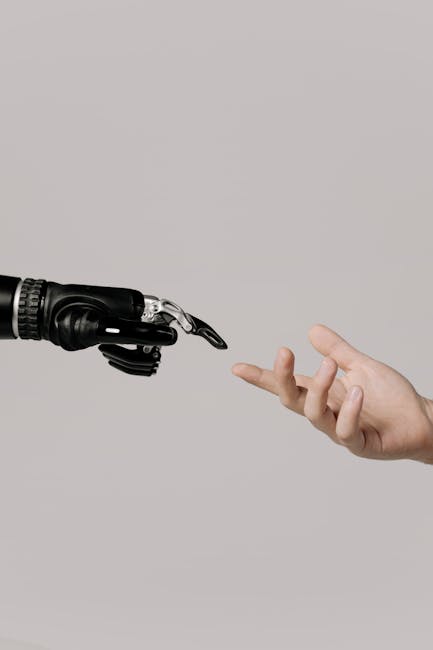
The rise of artificial intelligence has irrevocably reshaped the global talent landscape, presenting both unprecedented challenges and remarkable opportunities for businesses. Leaders today face the critical task of navigating this transformation, understanding not just what AI can do, but how it impacts their most valuable asset, their people. This article delves into the proactive strategies progressive organizations are employing to adapt to this new era. From reimagining skill sets and fostering continuous learning to redefining talent acquisition and promoting ethical AI integration, we will explore the multifaceted approaches leaders are taking to build resilient, innovative, and human-centric workforces capable of thriving alongside intelligent machines. The goal is not merely to survive, but to harness AI’s potential to unlock new levels of human performance and organizational success.
Understanding the AI-driven paradigm shift in talent
Artificial intelligence is not just a tool; it is a catalyst for a fundamental redefinition of talent and work. Leaders are increasingly recognizing that AI will not simply automate tasks but will fundamentally alter job descriptions, create entirely new roles, and elevate the demand for uniquely human skills. The paradigm shift involves moving from a focus on efficiency through automation to one of augmentation, where AI empowers human workers to achieve greater creativity, strategic insight, and productivity. This requires a deep analysis of existing roles to identify which tasks are best handled by AI, which can be enhanced by AI, and which demand a concentrated human effort. Forward-thinking leaders are conducting comprehensive workforce planning, leveraging data analytics to predict future skill gaps and emerging job categories. They understand that the talent landscape is no longer static; it is a dynamic ecosystem where continuous evolution is the only constant. The focus shifts from merely having the right people to having people who can effectively collaborate with intelligent systems, leveraging AI for data analysis, complex problem solving, and generating innovative solutions.
Reskilling and upskilling: The imperative for a future-ready workforce
As AI reshapes job functions, the traditional model of education and career development is proving insufficient. Leaders are therefore making significant investments in comprehensive reskilling and upskilling initiatives to future-proof their workforce. This goes beyond technical training in AI tools; it encompasses developing critical soft skills that become even more valuable in an AI-augmented world. These include critical thinking, creativity, emotional intelligence, complex problem solving, and adaptability. Progressive organizations are establishing internal academies, partnering with educational institutions, and utilizing AI-powered learning platforms to deliver personalized and continuous learning experiences. The goal is to cultivate a growth mindset throughout the organization, empowering employees to proactively learn new skills and embrace change rather than resist it. This strategic investment in human capital ensures that employees remain relevant and engaged, transforming potential displacement into opportunities for elevated roles and responsibilities. It is about fostering a culture where learning is an ongoing journey, not a one-time event.
| Skill Category | Traditional Focus | AI-Driven Focus | Leader Adaptation Strategy |
|---|---|---|---|
| Technical Skills | Specific software proficiency, data entry | AI tool mastery, prompt engineering, data interpretation, machine learning basics | Internal training programs, external certifications, AI literacy initiatives |
| Cognitive Skills | Routine analysis, memorization | Critical thinking, complex problem solving, strategic analysis, ethical reasoning | Case studies, collaborative projects, critical thinking workshops |
| Social Skills | Basic communication, teamwork | Emotional intelligence, creative collaboration with AI, negotiation, conflict resolution | Leadership development, team-building exercises, focus on human-AI synergy |
| Learning Agility | Adherence to existing processes | Continuous learning, adaptability, rapid skill acquisition, experimentation | Micro-learning modules, mentorship programs, fostering a growth mindset culture |
Redefining attraction and retention in the AI era
The rise of AI also necessitates a fresh approach to attracting and retaining top talent. Candidates are not just looking for competitive salaries; they seek organizations that offer opportunities for growth alongside cutting-edge technology, a clear purpose, and a culture that values human-AI collaboration. Leaders are leveraging AI itself in their recruitment processes, using intelligent algorithms to identify best-fit candidates, reduce bias, and streamline administrative tasks, thus allowing recruiters to focus on high-value interactions. Employer branding is evolving to highlight opportunities for innovation, continuous learning, and contributing to meaningful projects that leverage AI for good. Retention strategies are focusing on creating compelling employee value propositions that emphasize career development, work-life balance, and an inclusive culture where employees feel empowered to experiment with AI tools. Providing access to AI technologies and training within roles is becoming a significant draw, demonstrating an organization’s commitment to equipping its workforce for the future. Leaders understand that an exciting, AI-forward workplace is a powerful magnet for the talent required to drive innovation.
Ethical leadership and human-AI collaboration
Perhaps one of the most critical aspects of adapting to the new talent landscape is the commitment to ethical leadership in the deployment of AI. Leaders must not only focus on the technical implementation of AI but also on its broader societal and human impact within their organizations. This involves establishing clear ethical guidelines for AI usage in HR, addressing concerns around data privacy, algorithmic bias, and fairness in decision-making processes. Transparency in how AI is used, and for what purpose, builds trust and alleviates employee anxieties. Furthermore, leaders are responsible for fostering a culture of genuine human-AI collaboration, moving beyond the narrative of human replacement. This means designing roles and workflows where AI augments human capabilities, offloading repetitive tasks while humans focus on creativity, critical judgment, and interpersonal interaction. It also entails training managers to lead hybrid teams effectively, where both human and artificial intelligence contribute to organizational goals. Ethical considerations and a human-centric approach are not optional; they are fundamental to building a sustainable and thriving workforce in the AI era.
In summary, the integration of AI into the workplace demands a comprehensive and proactive adaptation from leaders across all sectors. We’ve explored how a fundamental understanding of AI’s impact on job roles is paramount, necessitating strategic investments in reskilling and upskilling initiatives that foster a culture of continuous learning. Furthermore, attracting and retaining top talent in this AI-driven world requires a reimagined employee value proposition, emphasizing collaboration, purpose, and opportunities for growth alongside technology. Crucially, ethical leadership remains the bedrock, ensuring AI is deployed responsibly and fosters genuine human-AI synergy. The future of work is not one where humans are replaced by machines, but one where human ingenuity is amplified. Leaders who embrace this reality, prioritize continuous adaptation, and cultivate ethical, learning-oriented environments will undoubtedly lead the way in shaping a prosperous new talent landscape.
Related posts
- AI’s Unforeseen Consequence: Preparing for a Future Labor Shortage
- Michele Kang’s $25M Institute: Revolutionizing Women’s Soccer & Sports
- Curative Health Secures $1.275B Valuation: AI-Powered $0 Deductible Health Plans for Employers
- Harness Deepens AWS Ties for AI Development & Intelligent Delivery
- AI in Figure Skating: Revolutionizing Olympic Performance
Image by: cottonbro studio
https://www.pexels.com/@cottonbro


