

AI in Business 2026: Future Predictions & Transformative Impact

AI in Business 2026: Future Predictions & Transformative Impact
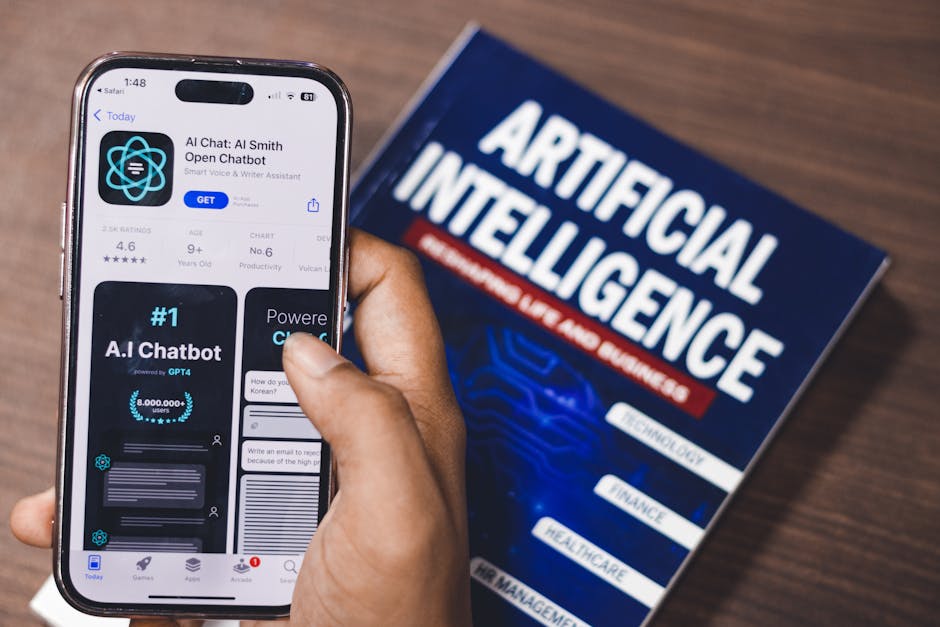
The year 2026 is rapidly approaching, and with it, a landscape fundamentally reshaped by artificial intelligence. Businesses across all sectors are grappling with the immense potential and inherent challenges of integrating AI into their core operations. This article delves into the transformative impact AI is projected to have by 2026, exploring key predictions for how it will redefine strategies, enhance efficiencies, and unlock unprecedented growth opportunities. We will examine the accelerating pace of AI adoption, its role in driving hyper-personalization, its influence on the future of work, and the critical importance of ethical considerations as companies navigate this technological revolution. Prepare to discover the future of business through the lens of AI.
The accelerating pace of ai integration
By 2026, AI will no longer be an experimental novelty but a foundational pillar for competitive advantage. The integration of artificial intelligence is transitioning from siloed projects to pervasive enterprise-wide strategies, embedding itself into virtually every business function. Companies that once viewed AI as an optional enhancement are now recognizing it as an imperative for survival and growth. This accelerated adoption is driven by several factors: the increasing availability of user-friendly AI tools, the growing talent pool, and the undeniable return on investment demonstrated by early adopters.
Expect to see AI become deeply interwoven into operational workflows, automating repetitive tasks, optimizing resource allocation, and providing real-time insights that were previously unattainable. From supply chain management predicting demand fluctuations to customer service bots handling routine queries, AI is streamlining processes and freeing up human capital for more complex, creative, and strategic endeavors. This shift demands a proactive approach from businesses, necessitating investment not just in technology, but also in upskilling their workforce to effectively collaborate with AI systems. The chart below illustrates projected AI integration levels across various business functions by 2026, highlighting the widespread nature of this transformation.
| Business Function | Projected AI Integration Level by 2026 (High/Medium/Low) | Key AI Applications |
|---|---|---|
| Customer Service | High | Chatbots, sentiment analysis, personalized support |
| High | Hyper-personalization, lead scoring, campaign optimization | |
| High | Predictive maintenance, demand forecasting, logistics optimization | |
| Medium | Fraud detection, automated reconciliation, financial forecasting | |
| Human Resources | Medium | Recruitment automation, employee engagement analysis, performance insights |
| Medium | Data analysis for innovation, simulation, drug discovery acceleration |
Predictive analytics and hyper-personalization driving growth
One of the most significant impacts of AI by 2026 will be its sophisticated application in predictive analytics and hyper-personalization, serving as powerful engines for business growth. AI algorithms, with their ability to process and analyze vast datasets at unprecedented speeds, will offer businesses unparalleled foresight. This means moving beyond historical reporting to anticipating future trends, customer behaviors, and market shifts with remarkable accuracy. Companies will leverage predictive AI to optimize inventory levels, forecast sales with greater precision, identify potential risks before they escalate, and even predict equipment failures, thus minimizing downtime and operational costs.
Coupled with predictive power, AI will elevate customer experience through hyper-personalization. Instead of broad segmentation, businesses will be able to offer individualized experiences tailored to each customer’s unique preferences, past interactions, and real-time behavior. This extends beyond personalized product recommendations to dynamic pricing, bespoke content delivery, and custom service pathways. For instance, an e-commerce site might dynamically adjust its entire user interface based on a visitor’s browsing history, purchase patterns, and even their current location or weather conditions. This deep level of personalization fosters stronger customer loyalty, boosts engagement, and directly translates into higher conversion rates and increased revenue streams, establishing a competitive moat for businesses that master its implementation.
Reshaping the workforce and operational efficiency
By 2026, AI will profoundly reshape the global workforce, shifting the paradigm from job displacement to job transformation and augmentation. Instead of merely replacing human workers, AI will increasingly act as a collaborative partner, taking over repetitive, data-intensive, or physically demanding tasks, thereby freeing human employees to focus on activities requiring creativity, critical thinking, emotional intelligence, and complex problem-solving. This symbiotic relationship will lead to significant gains in operational efficiency across various industries.
Consider the impact on areas like administrative support, data entry, and even some aspects of customer support. AI-powered tools will handle these with greater speed and accuracy, allowing human teams to concentrate on strategic initiatives, customer relationship building, and innovative projects. For example, in finance, AI will automate reconciliation and compliance checks, enabling analysts to delve deeper into market trends and strategic investments. In manufacturing, AI-driven robotics and quality control systems will reduce errors and enhance safety, while human oversight will focus on process improvement and complex troubleshooting. This evolution demands a proactive approach to workforce development, emphasizing continuous learning and upskilling programs to equip employees with the necessary AI literacy and collaborative skills to thrive in this augmented work environment.
Ethical ai, security, and the regulatory landscape
As AI becomes more deeply embedded in business operations by 2026, critical considerations around ethics, security, and regulation will move from theoretical discussions to front-and-center imperatives. The power of AI necessitates a robust framework for responsible development and deployment. Data privacy and security will be paramount, especially with AI systems processing vast amounts of sensitive information. Businesses must invest in advanced cybersecurity measures to protect AI models and the data they consume, guarding against breaches and malicious manipulation.
Beyond security, ethical AI design will be a non-negotiable aspect of public trust and brand reputation. Issues such as algorithmic bias, transparency in decision-making, and accountability for AI-driven outcomes will face intense scrutiny. Companies will need to actively audit their AI systems for fairness, ensuring they do not perpetuate or amplify existing societal biases. This involves diverse training data, clear explainability of AI decisions, and human oversight in critical areas. Furthermore, the regulatory landscape will continue to evolve rapidly. Governments worldwide are developing guidelines and laws concerning AI usage, from data governance to liability for AI errors. Businesses in 2026 must be agile in adapting to these emerging regulations, demonstrating compliance and a commitment to deploying AI that benefits both their bottom line and society at large. Ignoring these factors will not only carry significant legal and financial risks but also erode consumer and stakeholder trust.
By 2026, artificial intelligence will be an indispensable force, fundamentally redefining the operational and strategic fabric of businesses globally. We’ve explored how AI’s accelerated integration will move from niche applications to core enterprise functions, driven by its undeniable capacity for automation and insight generation. Predictive analytics and hyper-personalization will serve as key growth catalysts, offering unparalleled foresight and tailored customer experiences. The workforce will be augmented, not merely replaced, with humans and AI collaborating to boost efficiency and innovation. However, this transformative power comes with significant responsibilities. Ethical considerations, robust security measures, and adherence to an evolving regulatory landscape will be critical for businesses aiming to harness AI successfully and sustainably. The future of business is intelligent, demanding strategic vision, ethical stewardship, and continuous adaptation to thrive in this AI-driven era.
Related posts
- Top AI Stocks to Buy Now & Hold Until 2026: Invest for Future Growth
- Video Game Price Hike 2026: What Gamers Need to Know
- AI in Music: JENNINGS Explores Precedents of Industry Disruption
- AI in Project Management 2026: Reshaping the Future of Work
- PS Plus Extra & Premium: December 2025 New Games – Full Details Revealed
Image by: Sanket Mishra
https://www.pexels.com/@sanketgraphy