
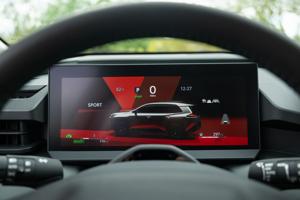
Advanced Cameras & Radar Systems Boost Car Safety
For decades, vehicle safety has primarily focused on protecting occupants during a crash through features like seatbelts and airbags. However, the automotive industry is undergoing a profound transformation, shifting its focus from passive protection to proactive crash prevention. At the forefront of this evolution is the sophisticated pairing of advanced camera systems with radar technology. No longer exclusive to high-end luxury vehicles, these intelligent safety systems are becoming standard across an increasing array of automotive segments, making cutting-edge protection accessible to a broader range of new-car buyers. This article will explore how this sensor fusion is revolutionizing vehicle safety, enhancing driver awareness, and paving the way for a safer driving experience for everyone on the road.
The evolution of automotive safety
Automotive safety has come a long way since its early days. Initially, efforts centered on structural integrity and occupant restraint systems designed to mitigate injury after an impact. Features like crumple zones, reinforced cabins, and the widespread adoption of seatbelts and airbags have undoubtedly saved countless lives. This era, often referred to as passive safety, focused on managing the consequences of a collision. However, as technology advanced, engineers began exploring ways to prevent collisions altogether. The introduction of anti-lock braking systems (ABS) and electronic stability control (ESC) marked a significant shift towards active safety, giving drivers more control in critical situations. While revolutionary in their time, these systems still relied heavily on the driver’s reaction and perception. The next frontier required a more sophisticated approach: equipping the vehicle itself with the ability to “see” and “react,” laying the groundwork for the advanced driver-assistance systems (ADAS) we see today, powered by an intricate network of sensors.
The power of sensor fusion: cameras and radar working together
Modern vehicle safety systems achieve their remarkable capabilities through a concept known as sensor fusion. This involves combining data from multiple types of sensors to create a more comprehensive and accurate understanding of the vehicle’s surroundings than any single sensor could provide. At the heart of this fusion are sophisticated cameras and radar units. Cameras excel at identifying objects, reading lane markings, recognizing traffic signs, and detecting pedestrians or cyclists due to their ability to process visual information, much like the human eye. They provide rich contextual data, including color and shape. However, cameras can be hindered by poor visibility conditions such as heavy rain, fog, or direct sunlight. This is where radar technology steps in. Radar uses radio waves to measure the distance, speed, and angle of objects, performing exceptionally well in adverse weather conditions and at longer ranges where visual clarity might be compromised. By fusing the data from both, the system can cross-reference information, confirm detections, and reduce false positives or negatives. For example, a camera might identify an object as a pedestrian, while radar simultaneously confirms its distance and speed, allowing the vehicle’s onboard computer to determine if an immediate braking action or warning is necessary with greater confidence and reliability.
Expanding accessibility: safety for every segment
One of the most encouraging trends in automotive safety is the democratizing of advanced driver-assistance systems. What was once the exclusive domain of luxury vehicles, laden with premium price tags, is now rapidly trickling down to mainstream and even entry-level models. Automakers are committed to making these life-saving technologies standard features, driven by both consumer demand and increasing regulatory pressure. This expansion means that more new-car buyers, regardless of their budget, can benefit from technologies like automatic emergency braking (AEB), lane-keeping assist, and adaptive cruise control. This widespread availability is crucial for overall road safety, as the more vehicles equipped with these systems, the greater the potential for reducing accidents and injuries across the entire road network. The integration into diverse segments is also pushing manufacturers to innovate, streamline production, and reduce costs, further accelerating their adoption. This shift marks a significant step towards a future where sophisticated vehicle safety is not a luxury, but a fundamental expectation.
To illustrate the growing adoption and effectiveness, consider the impact of some key ADAS features:
| ADAS feature | Estimated crash reduction (average) | Primary sensors utilized | Typical vehicle segments (initially) | Current vehicle segments (expanding to) |
|---|---|---|---|---|
| Automatic emergency braking (AEB) | 27% frontal crashes | Camera, radar | Luxury, premium sedans/SUVs | All segments (often standard) |
| Lane keeping assist (LKA) | 11% lane departure crashes | Camera | Luxury, premium sedans/SUVs | Mid-range sedans/SUVs, compacts |
| Blind spot monitoring (BSM) | 14% lane change crashes | Radar | Premium, mid-range | All segments (common option) |
| Adaptive cruise control (ACC) | 30% rear-end impact severity | Radar, camera | Luxury, premium | Mid-range to entry-level |
Note: Crash reduction percentages are estimates and can vary based on specific system implementation and driving conditions.
Beyond collision avoidance: the future of intelligent driving
The synergy of cameras and radar extends far beyond simply preventing frontal collisions or unintended lane departures. These foundational technologies are enabling a host of advanced functionalities that are transforming the driving experience and pushing us closer to fully autonomous vehicles. Adaptive cruise control, for instance, uses radar to maintain a safe following distance from the vehicle ahead, adjusting speed automatically, while cameras help confirm lane position and identify other traffic elements. Lane centering and traffic jam assist systems combine both sensor inputs to keep the vehicle precisely in its lane, even around curves, and manage stop-and-go traffic with minimal driver intervention. Furthermore, the high-resolution data from these sensors is critical for features like pedestrian detection in low-light conditions, intersection assistance that warns of cross-traffic, and even advanced parking aids. This constant stream of environmental data creates a real-time, 360-degree awareness that can augment driver perception, reduce fatigue, and significantly improve overall road safety. The ongoing refinement of these systems promises even more intuitive and robust safety features in the years to come.
The journey towards safer roads is continuously evolving, and the current revolution is undeniably centered on the intelligent integration of sophisticated cameras and radar systems. This powerful sensor fusion has moved automotive safety beyond mere crash survivability, empowering vehicles to proactively detect hazards, understand their environment, and assist drivers in preventing accidents altogether. The industry’s commitment to making these advanced driver-assistance systems accessible across all automotive segments is a game-changer, ensuring that vital technologies like automatic emergency braking and lane-keeping assist are no longer premium luxuries but standard safeguards for a wider populace. As these systems become more refined and widespread, we can anticipate a significant reduction in road accidents, injuries, and fatalities. The collaborative intelligence of cameras and radar is not just enhancing vehicle safety; it’s laying the groundwork for a future of more confident, comfortable, and ultimately safer mobility for everyone sharing our roadways.
vehicle safety, automotive safety, camera radar fusion, adas technology, advanced driver assistance systems, automatic emergency braking, lane keeping assist, sensor fusion cars, collision prevention systems, car safety technology, radar based safety, camera based safety