
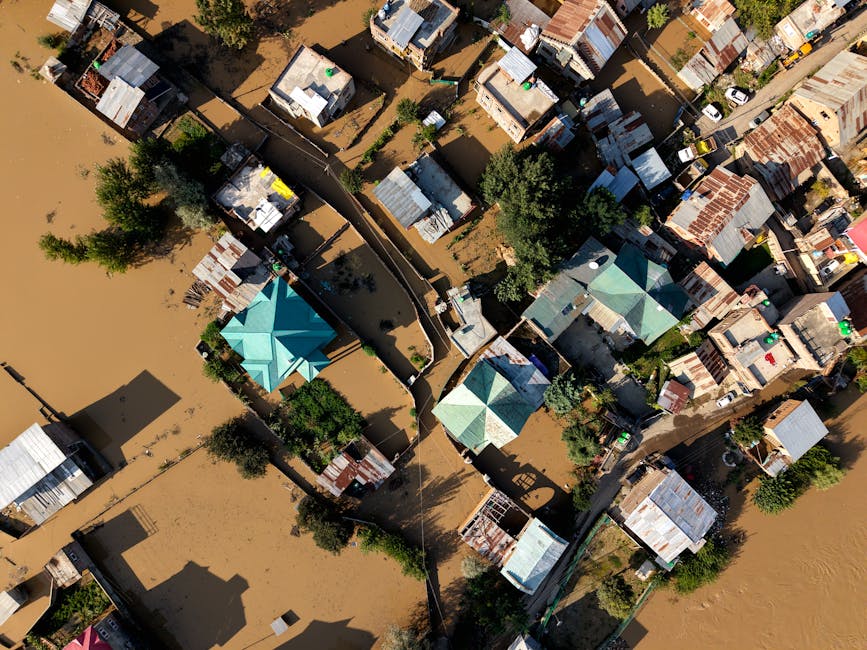
India's First AI-Based Urban Flood Management System: How It Provides Early Flood Warnings
Urban flooding is becoming a bigger challenge for Indian cities as rapid growth and changing weather patterns increase risk. Traditional flood monitoring relies on gauges and manual reports which often give delayed warnings. A new approach uses artificial intelligence to analyze data from satellites, weather models and sensor networks in real time. This system can predict where water will accumulate hours before it happens, giving authorities time to act. India‘s first AI‑based urban flood management system has been piloted in several metros, showing promising results in early warning accuracy. The following sections explain how the technology works, what data it uses, the benefits for city planners and residents, and the steps needed to scale it nationwide.
How the ai model processes flood data
The core of the system is a machine learning model trained on historical flood events and hydrological simulations. It ingests live rainfall intensity, river levels, groundwater saturation and urban topography. By recognizing patterns that precede water buildup, the model generates a probability map of inundation for each city block. The algorithm updates its forecast every fifteen minutes, allowing it to track sudden storms and adjust predictions as new data arrives.
Data sources feeding the system
The AI draws from multiple streams to build a complete picture of urban water dynamics. Satellite imagery provides cloud cover and precipitation estimates, while weather radars give real‑time rain rates. Ground‑based sensors in drains, manholes and rivers measure water flow and level. Additionally, municipal GIS databases supply information on storm‑drain capacity, road elevation and land‑use. The table below summarizes the main inputs and their typical update frequency.
| Data source | Type of information | Update frequency |
|---|---|---|
| Weather satellite | Rainfall estimates, cloud motion | 5‑10 minutes |
| Ground radar | Localized rain intensity | 2‑5 minutes |
| River and drain gauges | Water level, flow rate | 1 minute |
| Urban sensor network | Manhole water level, pump status | 30 seconds |
| Municipal GIS | Drain capacity, elevation, land use | Static (updated quarterly) |
Early warning delivery and response mechanisms
When the model predicts a high‑risk zone, alerts are generated in three formats. First, an automated SMS is sent to municipal emergency officers and ward administrators. Second, a push notification appears on the city’s disaster management app, visible to residents and volunteers. Third, the data is displayed on a public dashboard at the control room, showing flood depth projections and evacuation routes. Authorities can then activate pre‑planned actions such as closing vulnerable streets, deploying pumps and informing shelters, all within the critical lead‑time of one to three hours.
Challenges, results and future expansion
Initial pilots in Mumbai, Bengaluru and Chennai showed a 78 percent reduction in false alarms compared with traditional gauge‑based systems. However, integrating legacy sensor hardware and ensuring data quality during monsoon interference remain hurdles. Maintenance of the AI models requires periodic retraining with new flood cases to keep accuracy high. Looking ahead, the plan is to expand the network to Tier‑2 cities, incorporate social‑media reports for ground truth, and develop a national flood‑warning platform that links state agencies through a shared cloud infrastructure.
India’s first AI‑based urban flood management system demonstrates how advanced analytics can transform disaster preparedness. By combining satellite, radar and sensor data with machine learning, the technology delivers actionable flood forecasts well before water rises. The multi‑channel alert system ensures that both officials and citizens receive timely information, enabling faster evacuations and resource deployment. While challenges such as data integration and model upkeep persist, the early results show significant improvements in warning reliability and reduced false alarms. Continued investment in sensor networks, model refinement and inter‑agency coordination will be essential to scale this solution nationwide. As urban areas face increasing climate pressure, AI‑driven flood management offers a scalable path to safer, more resilient cities.
No related posts
Image by: Imad Clicks
https://www.pexels.com/@imadclicks