
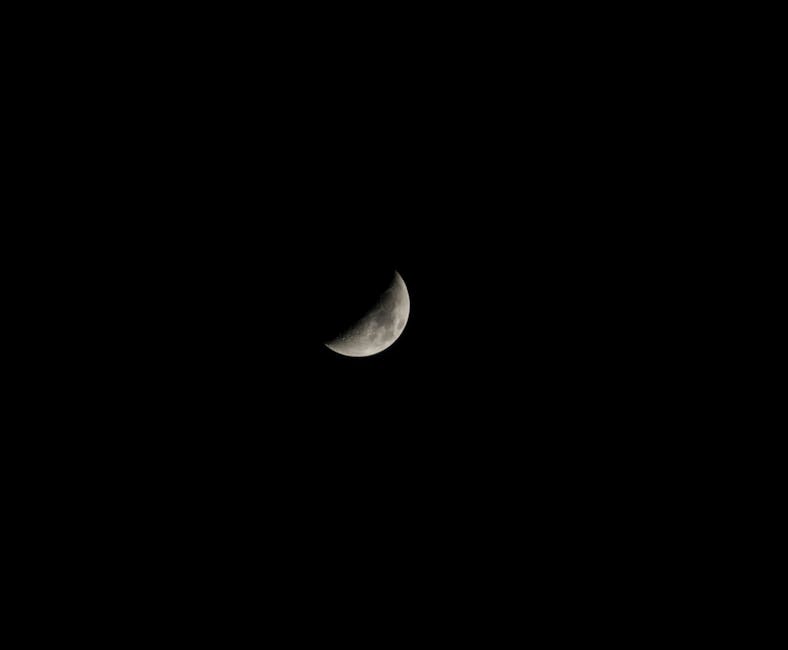
December 28 Moon Phase: What You'll See in the Night Sky
As the year draws to a close, the celestial canvas often offers spectacular views, and December 28 is no exception for skywatchers. For those curious about the nightly spectacle above, understanding the moon’s phase is key to appreciating its subtle beauty and prominent glow. This article will delve into the specific lunar phase presented on December 28, guiding you through what features to anticipate and how best to observe them. From its precise illumination to the optimal viewing conditions, we will explore everything you need to know to make the most of this particular night’s celestial display. Prepare to gaze upwards and uncover the intricate details of our nearest cosmic neighbor.
The waning gibbous phase explained
On December 28, the moon will be in its waning gibbous phase, a period following the glorious full moon that occurred just a couple of days prior. A waning gibbous moon is characterized by its decreasing illumination, gradually shrinking from its full luminosity as it progresses towards the last quarter. For December 28, the moon’s illumination typically hovers around 90-95%, meaning a significant portion of its face will still be bathed in sunlight, yet a subtle shadow will begin to reclaim its western limb. This phase offers a unique viewing experience, as the intense brightness of the full moon begins to subside, allowing for slightly more nuanced observations of its surface features.
Understanding this phase is crucial for knowing what to expect. While still incredibly bright, the waning gibbous doesn’t cast the same harsh glare as a perfectly full moon. The terminator line, the boundary between the illuminated and dark parts of the moon, becomes visible along one edge, providing excellent opportunities to see craters and mountains in high relief. This contrast, created by the sun’s lower angle of incidence, makes features along this line appear more three-dimensional. Here’s a brief look at the illumination progression around this date:
| Date | Moon Phase | Approximate Illumination |
|---|---|---|
| December 26 | Full Moon | 100% |
| December 27 | Waning Gibbous | 98% |
| December 28 | Waning Gibbous | 95% |
| December 29 | Waning Gibbous | 92% |
What to observe in the night sky
With a waning gibbous moon dominating the night sky on December 28, observers can anticipate a brilliant celestial object that rises later in the evening and remains visible through much of the night and into the morning hours. Its substantial illumination means it will be easily visible to the naked eye, casting noticeable shadows on the ground. For those using binoculars or a small telescope, the view becomes even more rewarding. Focus your attention along the terminator line, which on December 28 will be creeping across the moon’s western side (as viewed from the Northern Hemisphere).
Along this line, the sun’s low angle creates dramatic shadows within craters and along mountain ranges, making features like the Appennine Mountains or specific craters such as Copernicus or Tycho stand out with remarkable clarity. Even well-known lunar maria (dark plains) like Mare Imbrium or Mare Tranquillitatis will be beautifully illuminated, though their features might appear flatter than those near the terminator. Due to the recent full moon, the entire lunar disk will still be very bright, potentially washing out fainter deep sky objects. However, planets that are generally brighter, if positioned nearby, could still offer a captivating conjunction with our glowing satellite.
Maximizing your lunar observation experience
To truly appreciate the December 28 waning gibbous moon, a few strategic considerations can enhance your viewing pleasure. Firstly, consider the timing. Since a waning gibbous moon rises after sunset and sets after sunrise, you’ll have ample opportunity for observation throughout the night. The moon will be highest in the sky, and thus offer the clearest views, around the middle of the night. Secondly, find a location with minimal light pollution. While the moon is bright enough to cut through some urban glow, darker skies will reveal more subtle details and reduce atmospheric interference.
For equipment, your naked eye is perfectly sufficient for enjoying the moon’s overall shape and brightness. However, even a modest pair of binoculars (7×50 or 10×50 are excellent choices) will dramatically improve your view, bringing craters and mare into sharp relief. If you possess a telescope, even a small refractor or reflector will allow you to explore intricate surface features along the terminator. Remember to allow your eyes to adjust to the darkness for about 15-20 minutes before observing. Lastly, check the weather forecast for clear skies. Cloud cover can quickly obscure even the brightest lunar display, so plan your observation for a night with minimal clouds and stable atmospheric conditions for the best results.
Lunar insights: Beyond the glow
Beyond its immediate visual appeal, the December 28 moon phase invites us to ponder the moon’s broader significance and its journey through our solar system. The moon’s gravitational pull continues to exert a profound influence on Earth, primarily dictating our ocean tides. Even in its waning phase, it serves as a constant celestial companion, a beacon that has guided navigation, inspired countless stories, and marked time for civilizations throughout history. Observing the moon at different phases, like this waning gibbous, helps us understand its orbital mechanics and how its position relative to the sun and Earth dictates what we see.
The moon’s surface, scarred by billions of years of impacts, acts as a cosmic time capsule, preserving the history of the early solar system. Each crater, mountain, and mare visible on December 28 tells a story of intense geological and astronomical forces. While you’re observing the moon, take a moment to consider other celestial bodies that might be nearby. Sometimes, planets like Jupiter or Saturn can be found relatively close to the moon, offering a bonus spectacle. The moon, in any phase, is not just a rock in space; it is a dynamic element of our immediate cosmos, continuously shaping our planet and enriching our night sky.
As December 28 approaches, the night sky promises a captivating display with the moon in its waning gibbous phase. We’ve explored how this specific stage, just past full illumination, offers a unique opportunity to observe lunar features with remarkable clarity, particularly along the terminator line where shadows create dramatic contrasts. You now know that approximately 95% of the moon will be illuminated, presenting a bright yet detailed canvas for skygazers. From the naked eye to binoculars and telescopes, we’ve discussed how different tools can enhance your viewing experience, recommending optimal timing and locations for the best observations.
Remember to seek out clear skies and allow your eyes to adjust to the darkness to fully appreciate the moon’s intricate surface. Beyond the immediate visual, consider the moon’s profound influence on Earth and its rich cosmic history, adding another layer of appreciation to your observations. The December 28 moon phase is more than just a passing spectacle; it’s an invitation to connect with the universe and deepen your understanding of our celestial neighbor. So, look up, embrace the night, and let the glowing orb above inspire a sense of wonder as the year draws to a close.
No related posts
Image by: Petra Ryan
https://www.pexels.com/@petraryan