
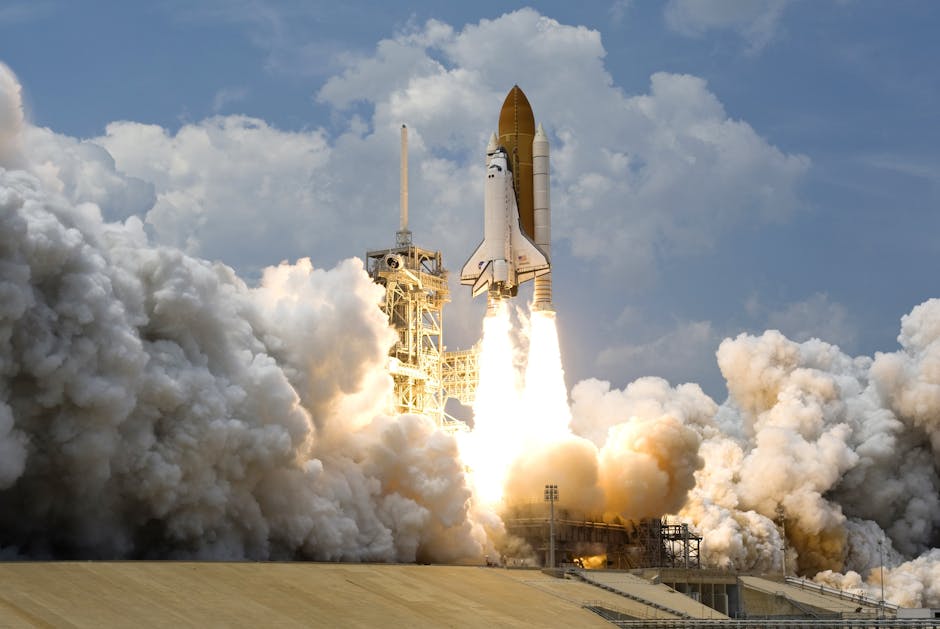
Ariane 6 Launch Tonight: Don't Miss Europe's New Era of Navigation Satellites
Ariane 6 launch tonight: Don’t miss europe’s new era of navigation satellites
Tonight marks a pivotal moment for Europe’s ambitions in space as the highly anticipated Ariane 6 rocket is poised for its inaugural flight. This isn’t just another rocket launch; it signifies the dawn of a new chapter for European independent access to space and advanced global navigation capabilities. Carrying critical Galileo satellites, the mission from Kourou, French Guiana, is set to bolster Europe’s own satellite navigation system, enhancing its accuracy, resilience, and strategic autonomy. For industries ranging from transportation and agriculture to defense and emergency services, a successful deployment will herald significant improvements. Join us as we explore why this launch is not just a technological feat but a strategic imperative that will shape the continent’s future in the increasingly vital domain of satellite technology.
Ariane 6: Europe’s next-generation workhorse
The Ariane 6 represents a significant evolution in European space launch capabilities, designed to succeed the highly successful Ariane 5. Developed by the European Space Agency (ESA) and operated by Arianespace, this new heavy-lift launch vehicle is engineered for greater flexibility, cost-effectiveness, and responsiveness in an increasingly competitive global space market. Its modular design allows for two main configurations—Ariane 62 with two solid rocket boosters and Ariane 64 with four—enabling it to cater to a diverse range of missions, from deploying constellations of small satellites to launching massive governmental payloads. This adaptability ensures Europe can maintain its crucial independent access to space for both commercial and strategic purposes, reducing reliance on other nations for critical launches and solidifying its position as a leading space power.
Galileo: Enhancing europe’s navigational independence
At the heart of Ariane 6’s inaugural mission lies the deployment of additional satellites for Galileo, Europe’s own global satellite navigation system. Conceived as a civilian-controlled alternative to other systems like the U.S. GPS, Russia’s GLONASS, and China’s BeiDou, Galileo offers unparalleled accuracy and reliability. Its advanced signals provide precision down to the centimeter, crucial for burgeoning technologies such as autonomous vehicles, precision farming, and smart city infrastructure. Furthermore, Galileo provides unique services like the Public Regulated Service (PRS), offering encrypted, robust navigation for governmental users, and an enhanced Search and Rescue (SAR) service that significantly reduces the time to locate distress signals. The continuous expansion and modernization of the Galileo constellation ensure Europe’s strategic independence in a critical domain that underpins modern society and economy.
The strategic importance of the launch and its impact
The successful launch of Ariane 6 carrying Galileo satellites transcends mere technological achievement; it is a profound declaration of Europe’s strategic autonomy and its commitment to critical infrastructure. In an era where space assets are increasingly vital for economic prosperity and national security, having an independent capability to launch payloads and operate a robust navigation system like Galileo is paramount. This mission bolsters Europe’s position in the global space race, ensuring that essential services—from secure communications and environmental monitoring to defense and disaster management—remain under European control. The economic impact is also substantial, fostering innovation and creating high-tech jobs across the continent, while providing a sovereign platform for future European scientific and commercial endeavors in orbit.
Mission objectives and technical specifications
The inaugural Ariane 6 flight is meticulously planned to achieve several key objectives. Primarily, it will demonstrate the full operational capabilities of the new launcher, from its powerful engines to its advanced upper stage, ensuring all systems perform as expected in a real-flight environment. The specific Galileo satellites on board are designed to integrate seamlessly into the existing constellation, further enhancing its global coverage and signal integrity. These FOC (Full Operational Capability) satellites incorporate improvements in clock accuracy and signal generation, contributing to the overall system robustness. The mission profile involves deploying these satellites into a specific Medium Earth Orbit (MEO) at approximately 23,222 km altitude, a complex maneuver that requires precise orbital insertion. The success of this initial mission is crucial for certifying Ariane 6 for future operational flights and the continued expansion of Europe’s space infrastructure.
Here’s a snapshot of the mission’s technical details:
| Parameter | Detail |
|---|---|
| Launcher | Ariane 6 (A62 configuration) |
| Payload | Galileo FOC satellites |
| Launch Site | Kourou, French Guiana |
| Primary Mission | Demonstration flight; Galileo satellite deployment |
| Target Orbit | Medium Earth Orbit (MEO) |
| Altitude | ~23,222 km |
The successful execution of this mission will validate years of development and investment, paving the way for a more competitive and autonomous European presence in space.
Conclusion
The impending launch of Ariane 6 with its vital cargo of Galileo satellites is far more than a routine space mission; it represents a profound leap forward for European independence and technological prowess. This event marks the culmination of extensive effort and investment, signifying Europe’s unwavering commitment to securing its own access to space and enhancing its critical navigation infrastructure. With Ariane 6, Europe gains a flexible and competitive launcher, capable of meeting diverse future demands. Simultaneously, the continued expansion of the Galileo constellation ensures superior, autonomous navigation services for citizens, industries, and governments across the globe. As we anticipate the ignition of its engines tonight, we are witnessing the solidification of Europe’s strategic position in the global space arena, fostering innovation, security, and a future guided by European ingenuity. Don’t miss this historic moment.
No related posts
Image by: Pixabay
https://www.pexels.com/@pixabay