

30 Years Ago Today: How Nintendo Revolutionized Mario’s World Forever

30 Years Ago Today: How Nintendo Revolutionized Mario's World Forever
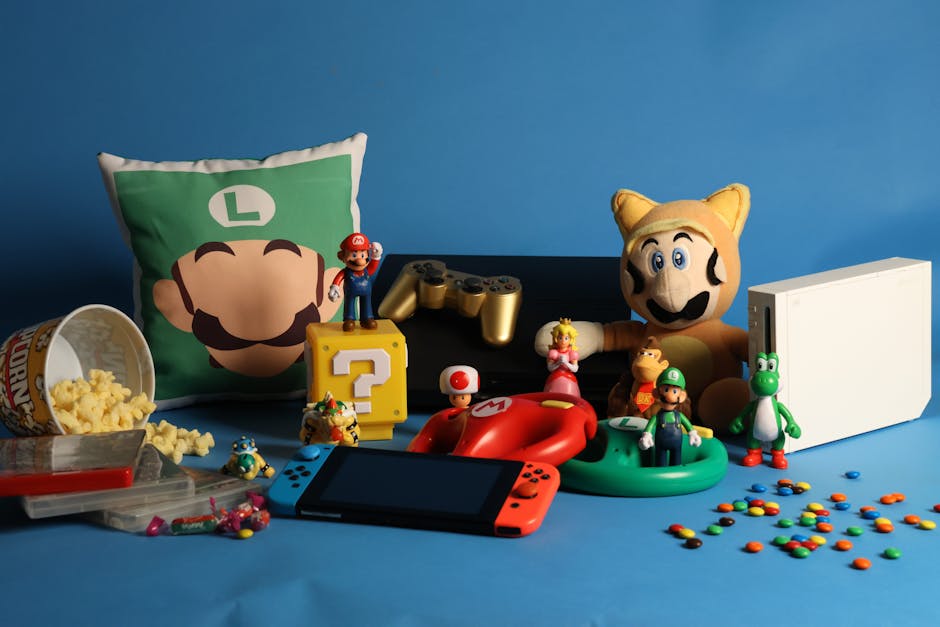
Thirty years ago today, a seismic shift occurred in the gaming landscape. The release of Super Mario 64 on November 21, 1996, in Japan, wasn’t just another Mario game; it was a radical reimagining of what a platformer could be, and indeed, what video games themselves could achieve. This monumental title, arriving with the launch of the Nintendo 64, didn’t merely introduce Mario to a three-dimensional world; it established the very blueprint for 3D movement, camera control, and interactive environments that countless games would follow. Today, we delve into how this groundbreaking title, precisely three decades ago, forever revolutionized Mario’s world and set a new standard for interactive entertainment.
The leap into three dimensions
Before Super Mario 64, Mario was the undisputed king of 2D platforming. Titles like Super Mario Bros. and Super Mario World defined precision jumping, intricate level design, and infectious charm within a flat plane. However, the advent of 3D gaming presented a daunting challenge and an unprecedented opportunity. Nintendo’s approach was not to simply translate the 2D formula into 3D, but to fundamentally rethink movement and exploration. The introduction of an analog stick on the Nintendo 64 controller was instrumental, allowing for nuanced directional control that was revolutionary at the time. Players could walk, run, and sprint with an intuitive fluidity previously unimaginable. This level of freedom extended to Mario’s acrobatic abilities: triple jumps, wall kicks, and the iconic long jump were not just additions; they were core mechanics that encouraged experimentation and mastery of the environment. The Mushroom Kingdom, once a series of discrete levels, transformed into expansive, interconnected worlds begging to be explored from every angle.
Redefining camera and control
One of the most significant hurdles in early 3D game development was camera control. Games often suffered from awkward, restrictive viewpoints that hindered gameplay. Super Mario 64 tackled this head-on with its innovative “camera buddy” system, allowing players to manually adjust the camera’s position and angle. While not perfect by today’s standards, it was a revelation, offering unprecedented freedom to survey the environment and track enemies. This dynamic camera, combined with the analog stick’s precise control, created an immersive experience where players felt truly present within Mario’s world. The ability to look up, down, and all around provided a sense of scale and depth that was utterly new. This symbiotic relationship between player control and camera perspective became a cornerstone for future 3D games, influencing everything from adventure titles to first-person shooters.
Worlds filled with emergent gameplay
Super Mario 64 liberated gameplay from linear progression. Instead of reaching the end of a level to advance, players were tasked with collecting Stars scattered throughout each sandbox-like world. These Stars were often hidden behind environmental puzzles, challenging enemy encounters, or clever platforming segments, encouraging a non-linear approach to exploration. This design philosophy fostered emergent gameplay; players could discover multiple solutions to reach a Star, or even tackle them in different orders. The open-ended nature of the levels, such as the iconic “Bob-omb Battlefield” and “Whomp’s Fortress,” allowed for a sense of discovery and replayability that was a significant departure from the strictly linear paths of 2D games. Each castle and course felt like a miniature playground, ripe for experimentation and personal achievement. The game also introduced memorable characters and mechanics that became staples, such as Bowser’s elaborate boss battles and the various cap power-ups.
Impact and legacy
The impact of Super Mario 64 cannot be overstated. It not only set the gold standard for 3D platformers but also influenced countless other genres. Its innovative camera system, intuitive analog controls, and open-ended level design became foundational elements for the entire 3D gaming era. Games like The Legend of Zelda: Ocarina of Time, Banjo-Kazooie, and even later titles like Grand Theft Auto III owe a significant debt to the groundwork laid by this Mario masterpiece. It proved that 3D could be more than a graphical gimmick; it could fundamentally enhance gameplay and player immersion. The game’s success was a testament to Nintendo’s willingness to take risks and innovate, solidifying its position as a leader in the industry. Its legacy lives on not just in the Mario series itself, which continues to push boundaries, but in the very fabric of modern video game design.
In conclusion, thirty years ago today, Super Mario 64 achieved something truly remarkable. It didn’t just bring Mario into the third dimension; it redefined the possibilities of interactive entertainment. By masterfully integrating revolutionary analog controls, an intuitive camera system, and expansive, non-linear worlds, Nintendo delivered an experience that was both accessible and deeply engaging. This game transcended its peers, offering a blueprint for 3D game design that would be emulated for decades. The emphasis on player freedom, exploration, and emergent gameplay fundamentally altered how games were conceived and played. The legacy of Super Mario 64 is undeniable, a testament to its visionary design and its enduring impact on the gaming world, proving that innovation, even three decades later, continues to shape the virtual realities we inhabit.
Related post: No related posts
Image by: Mao Batista
https://www.pexels.com/@maobphoto